HILLSDALE CONSERVATIVES | Special Report
Hillsdale County, Michigan | February 2026
Free Speech on the Hill, Corruption in the Dale
There are two ways to shut people up.
One is obvious. Tell them they cannot speak.
The other is the modern method. Let them speak, then make sure speaking comes with a price tag, a deadline, a legal threat, or a procedural dead end. Participation is free. The speech tax is not.
That is why this line from Thomas More Law Center President and Chief Counsel Richard Thompson lands like a hammer on nail:
In the national citadel of free speech, local government has quietly built a different monument: free speech with a deductible.
WHAT LAWFARE LOOKS LIKE IN SMALL TOWN AMERICA
It rarely starts with a lawsuit. It starts with a tone.
The phrases are always the same.
“We have to talk to counsel.”
“We cannot discuss that.”
“We might get sued.”
“That could be defamation.”
“That is not on the agenda.”
“We will address it later.”
Then it progresses.
Step 1: Change the question
Turn a duty into a risk management problem.
Step 2: Control the venue
Move the fight from the room to a forum citizens cannot access and participate.
Step 3: Control the timeline
Deadlines, clocks, administrative pathways, and procedural traps.
Step 4: Control the record
Keep the issue off the agenda. Keep votes out of minutes. Keep accountability unofficial.
Step 5: Raise the cost
Threats. Litigation. Criminal process. Public smears. Professional retaliation.
The pattern is not subtle once you see it. It is just dressed in paperwork.
Courtesy The Adams Times
CITY HALL
Jan. 20, 2026: Eric Moore, the Library, and the Cost of Speech
On January 20, 2026, Hillsdale City Council debated the appointment of Eric Moore.
A councilmember raised a policy objection made by Moore, tied to the library and children’s materials: can a city curate age appropriate content, or must it adopt a hands off posture because someone might sue?
Within minutes that council member laid out how governance was translated into liability language. Deductibles. Coverage exclusions. Premium risk. The implicit lesson was familiar to anyone who has watched institutions protect themselves instead of the public.
This is the first mechanism of narrative control. Change the question.
Instead of “Should we do our duty,” the new question becomes “Can we afford to do our duty.”
Then the theoretical became real. Speech made in official capacity, during official deliberation, sparked legal escalation. Thomas More Law Center publicly announced it was stepping in to defend Councilmember Joshua Paladino in response to a defamation threat tied to his comments about Moore’s appointment and related policy concerns.
That moment matters because it turns the abstract into the concrete. The message to every citizen watching is not complicated.
You can speak.
You just have to be willing to pay for it.
The Irony in Hillsdale
Hillsdale College is famous because it defends free speech in principle.
Hillsdale is becoming famous for pricing it in practice.
TOWNSHIP GOVERNMENT
Certified Mail, 30 Day Clocks, and the Lansing Escape Hatch
If city level lawfare often looks like a defamation threat, township level lawfare arrives in cleaner packaging.
Certified mail. Deadlines. Statutory language. A timeline that puts your local board (who just so happens to be operating off of a promise of getting paid millions” an excuse to push the project through.
In Fayette Township, the solar expansion fight is being conducted under the shadow of Public Act 233 of 2023. This is not theoretical. Nearly 80 Michigan townships, along with several counties, have jointly appealed the Michigan Public Service Commission’s PA 233 implementation order in the Michigan Court of Appeals.
But Fayette did not receive an appellate brief. Fayette received a clock.
In February 2026, Heartwood Solar II, LLC delivered a certified letter demanding to know, within 30 days of receipt, whether Fayette had adopted a Compatible Renewable Energy Ordinance consistent with PA 233. That is not a summons. But it runs on the same operating logic.
Compress the timeline.
Define the terms.
Build the record.
Set the next venue if the local forum does not comply.
Local debate can continue in the room, but leverage sits outside it. Public comment becomes a ceremonial speed bump while the real machinery runs elsewhere.
And when conflict of interest enters the picture, the legitimacy crisis deepens. Recusal is not optional. Disclosure is not a courtesy. Those are the guardrails that separate public service from private gain with a public seal.
The public is not imagining things when it senses this. People are watching decisions that affect land, value, and future generations. They are watching who benefits. They are watching who steps aside under the public pressure.
This is the township version of the speech tax. You can talk. But the decision is already being engineered for a different courtroom, in a different city, with different rules.

COUNTY GOVERNMENT
Agenda Control Versus Public Duty
Once sworn testimony and court developments enter the public domain, county government faces a basic fiduciary choice.
That is precisely what the Hillsdale Conservatives proposed resolution demanded. It called for preservation of all related physical and digital systems and communications, for prevention of destruction absent lawful court order, for referral to an independent authority, and for a roll call vote to be entered into the official minutes. Hillsdale_Conservatives_Propose…
That last item is the pressure point. Minutes are where narratives go to die because minutes force accountability.
If you can keep it off the agenda, you can keep it out of the record.
If you can keep it out of the record, you can keep the public arguing in the dark.
The silence on securing our local elections from a County Clerk who has admitted to violating election law is deafening. The refusal to treat election preservation as a public duty is not neutral. It is a choice.
Noticing A Pattern Yet?
In the town known nationally for free speech, the local establishment has discovered a better tactic than censorship.
They do not ban your speech. They bury it.
Then they call it procedure.
Corruption in the Republican Party
When Courts Do Not Just Decide Disputes, They Decide Who Is Real And Who Can Speak
Inside the Republican Party (the only party in Hillsdale, currently controlled by corrupt government officials), this is not Democrat versus Republican. It is grassroots versus establishment inside the same organization.
That is where lawfare becomes especially effective, because it does not only punish speech. It can declare legitimacy.
A declaratory judgment is not persuasion. It is a stamp.
An injunction is not consensus. It is a freeze frame.
When a court is asked to declare who “the party” is, litigation becomes a substitute for trust. The venue changes. The rules change. The public is told to sit down while grownups with titles and attorneys decide what reality is.
More recently, grassroots Republicans have framed State Committee settlement and representation disputes in the same terms. Lawsuit risk becomes the excuse for selective rule enforcement, selective protection, and deals that can permanently shape who gets counted and who gets locked out.
In plain English, it looks like this.
Some people get shielded. Some people get handed the bill. The county’s future gets negotiated like an asset.
Moore Irony in Hillsdale
Free speech is celebrated on the hill.
But when conservative principles threaten entrenched power off the hill, the next move is not debate.
The next move is procedure, counsel, and court.
INSIDE THE STATE PARTY: WHEN THE FINDINGS NEVER REACH THE BODY
Here is the part the public rarely sees. The most effective lawfare is not always a lawsuit. It is the decision to stop truth from becoming “official.”
District 5 state committeeman Rich McCoy from Berrien County who worked on the Hillsdale matter inside State Committee structure described a process that was designed to produce dispute resolution through evidence, cross examination, a hearing, and written findings. In his account, the Policy Committee’s early work on a Precinct Delegate Bill of Rights included a robust dispute resolution framework precisely because factional disputes do not end on their own. They end when an authorized body makes findings of fact and applies rules to those facts.
His point was simple and brutal: rules do not execute themselves.
According to his email, the committee was deadlocked by a 7 to 6 split, and opponents repeatedly warned that a real dispute resolution process would be “illegal,” create “FEC complications,” or undermine county independence. The result, as he describes it, was delay by design.
He also describes a trigger requiring legal review before the work could advance, a review that, in his telling, was never completed. Not because it was impossible. Because keeping the work in limbo was useful.
He built a repository, reconstructed the case file, tracked witnesses and documents, reviewed Hillsdale County GOP bylaws, and identified a key factual issue: whether the August 25, 2022 meeting that removed and replaced officers complied with bylaw requirements, including whether the chair presided as required under Article V, Section I. In his view, that fact mattered because it affected legitimacy, downstream delegate apportionment, and whether the state party had a basis to intervene.
The most important part of his account is what happened next.
He says a committee meeting was called to lay out a process and schedule for moving through the Hillsdale case, but that instead of an evidence based hearing and findings of fact, a resolution was moved immediately. No factual record. No cross examination. No findings delivered to the State Committee body to evaluate.
In his telling, the process was hijacked into negotiation and settlement posture. He points out coordination between a bloc of committee members and MIGOP counsel, resulting in a resolution framework tied to a $45,000 liability issue and delegate apportionment terms. He describes amendment efforts aimed at two priorities: protecting Hillsdale defendants from financial ruin and restoring delegate count so delegates could re engage. Those amendments failed at State Committee after Committeeman Matt Wilks stoked fears of lawfare and lied on the State Committee floor about the legitimacy of Hillsdales County Party.
When evidence threatens the narrative, the establishment does not always refute the evidence.
Sometimes it prevents the evidence from ever reaching the body through threats of lawfare.
That is not governance. That is narrative management with parliamentary procedure, with an expensive lawyer in the shadows waiting on a payday.
Hillsdale College Principles in Berrien County
Hillsdale College teaches people to argue from principle and evidence.
The establishment response is to keep the evidence out of the packet.
On Mon, Feb 16, 2026, 10:14 PM richard mccoy <mccoy.bcgop@gmail.com> wrote:
Hello everyone, I’d like to give everyone a very different perspective of what has happened and why. I have been involved with this issue since being asked to serve on the policy committee at the beginning of the current term. The policy committee met for the first time approximately March of 24 at Hillsdale (I believe). Jim Runestad attended and introduced us to Dan Bonamie who he had made chair. At this meeting it was announced that the first two projects assigned to the policy committee would be the precinct delegate bill of rights and a budget transparency amendment that had been sent in by one of the members.
At the time, I had no real idea about the division in our party and what lay ahead. I was somewhat aware of what had been alleged to have happened in Kalamazoo and I was also very aware of what had happened in Hillsdale because we had just passed the resolution at the most recent Feb D5 caucus.
Regardless of its name which was determined before Policy took it on, the sub-committee saw the real need in our party as dispute resolution. Factional disputes are everywhere in our state, sometimes one side wins and the other side just quits. Sometimes, as we see in Hillsdale and Kalamazoo, it never ends. And it never ends because we do not have structure for dispute resolution.
In the July meeting, the committee assigned us a third task which was to address Hillsdale. By then, PDBOR already included a robust dispute resolution framework that consisted of a complaint submission as the entry point, evidence submission and cross-examination, a hearing, a ruling, and then written opinions (both majority and minority) with the entire package being shared with the body. I believe this is the correct approach for two reasons: (1) in every dispute there are two sides. It is naive to think that we can make a set of rules that execute themselves. Rules alone are not a solution. Before justice can be achieved, any group making a decision in favor of one party or the other has to know what happened….and there will be at least two versions of it. This is why it is necessary to require that both parties bring evidence and that the evidence must be examined so that a Finding of Fact can be developed. Then and only then, after the facts are determined can we apply the rules and determine an outcome.
This was and still is my conviction. I was assigned the task, and I pursued justice according to that conviction.
You may be asking by now, what took so long. First let me say that it could have, and should have been done by the end of October because neither project was technically difficult. The difficulty is that the 7-6 split on policy committee made progress nearly impossible. Meeting after meeting half of us talked about how we could move forward and what we should do while the other half insisted that what we were trying to do was illegal, it would create FEC complication, and that creating a dispute resolution process would amount to a loss of county party independence. It is important to know that in the letter Jim put out last week, he stated that the GC had vetted the proposal and found no legal or FEC concerns. By the same token, the Chair could have had the GC do that work 6 months ago and perhaps things could have moved faster.
In any event, the first version of PDBOR was passed by policy in late Oct/Nov with a trigger requiring a legal review before advancing to the full committee…this legal review was never done, and I to this day do not know why. As we were approaching the 30 day window for the Dec meeting, the District 4 Chair submitted a condensed 5 page version. It was this version that we (D5) reviewed and passed in our Dec meeting. Just before our Dec meeting, it was determined by the Chair that the notice of the D4 submission was improper and that it would be on the Feb meeting agenda. Once we resumed our work in Jan, the committee met again to review the D4 proposal and voted to reject it 7-6.
Evenso, I had already begun working on the Hilldale project. As you can see, I built a repository for the case and at the request of Chair Bonamie I built a process and a schedule. I spent weeks tracking down information from Lance, Jon Smith, and Mosby. I reconstructed the entire case file. I read the case, I talked to the witnesses and I studied the bylaws of Hillsdale County Republican Party.
This is what I found out. On August 25, 2022 the Leiniger faction gathered together and voted to remove and replace the existing officers. Afterwards, a judge ruled that the meeting was proper and that Leiniger was the legitimate chair. On page 10 of the verified complaint, you will see how Leiniger’s attorney painstakingly stepped through the Hillsdale bylaws chapter and verse showing proper meeting notice, proper removal, and proper election of new officers. Apparently no one on our side attempted or was able to show that the August 25 meeting was not a properly held meeting. What do you think it would mean if officers were removed and replaced at an improper meeting? So as I went through the case, I realized that the meeting did not appear to be proper. Article V Section I of the Hillsdale bylaws states “The Chairperson shall preside at all HCREC meetings”. And if you notice back on page 10 of the verified complaint, Leiniger’s attorney mentioned every other relevant bylaw requirement for that meeting and what happened except for that one.
This matters for two reasons. The first is that Leiniger reduced the delegate count from 100 to 50 the next spring which strengthened his hold on the party. But the second reason is that I felt that the state party would only act if they were faced with hard evidence that the election of Leiniger was not proper….which it appears that it was not.
By the middle of January the plaintiff’s complaint was on file. By Jan 27, the plaintiff’s brief was on file and Leiniger had been notified that his response was due. Even at this moment, I had already read the case and was ready to start drafting my opinion. I planned to use the cross-examination period and the hearing to confront Leiniger over the fact that the Chair had not presided at the Aug 25 meeting. This would create an opportunity make sure I had not missed anything in my research, but it was not to be. Early in February, Chair Bonamie called a committee meeting to lay out the process and a schedule for moving through the Hillsdale case. As soon as the meeting was called to order, Matt Wilk made a motion to pass a Hillsdale Resolution…there was no discussion of the facts, there was no discussion of what happened. He jumped right to the solution. Turns out he had decided to inject himself into this negotiation by going around Bonamie and the Chair and was working directly with MIGOP GC and the parties.
What we now know is that Matt Wilk appears to be coordinating with 7 members of the policy committee on a regular basis for the purpose of controlling everything we do. The pattern has now become unmistakeable. So that night, all our amendments were rejected and it became clear that we would not conduct a true investigation or deliver a finding of fact to the state committee. Subsequent to this meeting, the resolution was noticed. It required HCREC to restore the delegate allotment and it required a settlement agreement relieving MIGOP of the $45,000 settlement. Then a few days later, a new version came out after Leiniger told Wilk to go F himself. The new version dropped the requirement to restore the delegate allotment. Basically, Leiniger got a get out of jail free card and MIGOP got out of the legal liability.
I worked tirelessly the week before the Feb 14 meeting to get a consensus on what our play would be to counter this. When I got to bed after 1am on the 14th, there were two alternate resolution versions ready to go. The next morning after we saw the mood of the room, we simplified it even more on the fly in hopes that we could get something done for Hillsdale. I had two priorities: (1) have our people covered in the settlement agreement so they avoid financial ruin and (2) restore the delegate count so that our delegates could re-engage in the party. My amendment failed even after great speeches by Todd and Jonathan. Notice who showed up and who voted. D4, D1, and D9 voted in lock for Hillsdale. Those districts are led or influenced by Lori Skibo, Shawn Hill, and Dan Bonomie. Those are the people I work with on a daily basis. I helped to deliver those votes from districts that some here in D5 have a real problem with. Apparently, they don’t have a problem with you. And apparently, they care more about doing the right thing than whatever politics divides this party.
So here is what I would ask all of you to consider: The group that Todd worked with to make a deal for Hillsdale stabbed him in the back and made us all into fools— yet he makes no mention of his failed back room deal in his email. I guess he needs to find someone else to blame. I’ll tell you who I blame. I blame Matt Wilk, Chris Long, and the rest of the crew that voted against Hillsdale. I find it completely ridiculous to blame the people who busted their ass on this program and those districts who showed up to vote for Hillsdale and leave blameless the SOBs that betrayed us all. I would even go so far as to say that if our D5 team had followed the path of supporting PDBOR instead of trying to undermine it, we would have gained so much time in the schedule that we would have most probably been able to overcome Wilk’s attack.
The Links in his email are working and will take readers to all the evidence and processes laid out for Policy Committee to work on addressing the scandal in Hillsdale.
STATE LEVEL LAWFARE
At the state level, lawfare stops being a threat and becomes infrastructure.
This is where the machinery does not just pressure you. It processes you. It gives you a case number, a headline, a theory of guilt widely distributed by the mainstream propaganda networks, and a long slow punishment schedule disguised as “due process.”
And Hillsdale County got a front row seat.
In the Adams Township election case, what should have been a routine prosecution turned into a courtroom revelation. Michigan election officials Jonathan Brater, Director of the Michigan Bureau of Elections, and Abraham Dane, Hillsdale County Clerk (Also and officer in Hillsdale Corrupt republican party, responsible for throwing out precinct delegate affidavits and helping lower precinct delegate allotment), gave sworn testimony in August 2025 that exposed the real hierarchy in Michigan elections: statute on paper, policy in practice.
When a clerk followed the law, she was charged and removed.
When officials admitted their orders were not law, they kept their jobs and are protected by corrupt government.
A Courtroom Revelation: The Five Point Pattern
1. The deletion order with no legal basis
Brater conceded the directive to erase 2020 election data from voting machine V drives was “administrative policy,” not statute, while Michigan law requires preservation of election records for at least 22 months.
This is the whole game.
If policy can erase records, then policy has replaced law.
2. Erasing the 2020 election
Dane testified the V drives contained cast vote records, in other words a record of each ballot and the votes marked, and that wiping those drives effectively erased the 2020 election across townships.
In normal life, deleting the record is what you do when you do not want the record.
In government life, they call it “administrative maintenance.”
3. Seizing machines without authority
Dane admitted under oath he had no lawful authority to seize Adams Township’s tabulator and ballots, yet did so anyway, and pressured other clerks not to loan equipment to Adams, affecting a later election.
This is where the badge and the policy memo start acting like a warrant.
4. Ten dollar flash drives
Testimony attributing the failure to preserve records to the cost of roughly ten dollars per flash drive.
That is not a budget crisis. That is a confession of priorities.
A government that can spend unlimited money prosecuting a clerk, but cannot spend ten dollars preserving ballots, is not broke. It is calibrated.
5. Excessive force against a local clerk
Escalation as deliberate acts enforced through intimidation and seizure, not routine oversight.
Translation: the system did not persuade. It compelled.
Two Raids and a Missing Narrative
An initial warrantless seizure of election materials from the township, followed by a second raid using Michigan State Police under a search warrant after township officials insisted any seizure of the tabulator required judicial review.
Then the public narrative collapsed where it mattered most.
On Count Five, the tabulator related charge, the judge found no probable cause and dismissed the count at the preliminary stage, meaning the dramatic claim that justified the raid did not meet even the low threshold required to proceed.
That is a tell.
When the spectacle dies early, but the raid remains, it becomes harder to pretend the purpose was justice. The purpose starts looking like deterrence.
The Lesson the Machine Teaches
This is how narrative control works when the machinery is fully engaged.
The first headline becomes the weapon.
The process becomes the punishment.
And the lesson is delivered to every clerk watching.
Do not resist.
Do not ask questions.
Do not make it difficult.
In a healthy system, policy memos do not outrank statutes. In an unhealthy one, the memo gets a badge with authority and the statute gets treated like a worthless piece of paper.
The escalation pattern.
City level: speech gets priced.
Township level: local control gets timed and moved.
Party level: legitimacy gets litigated.
State level: policy gets enforcement power.
When policy can delete history and law can prosecute the person who tried to preserve it, you no longer have election administration. You have narrative administration.
NATIONAL MIRROR
The Same Playbook, Just With More Zeros
At the national level, Trump is the obvious example because everything is larger: budgets, headlines, legal teams, and the number of people who make a career out of pretending process is not punishment.
The mechanism is familiar.
Legal action becomes messaging.
Accusations become identity.
Process becomes punishment.
Allies get chilled.
Resources get drained.
And the public is trained to treat “charged” as “guilty” long before facts are tested.
Love him or hate him, the playbook works because it does not require truth. It only requires fear.
And once you see it nationally, you cannot unsee it locally.
A defamation threat at City Council.
A certified 30 day clock in a township solar fight.
A courthouse attempt to decide party legitimacy.
A criminal case used to discipline record preservation.
A county board that refuses to put preservation duties on the agenda and refuses to put its vote into the minutes.
Different arenas. Same pattern.
Control the venue.
Control the timeline.
Control the cost.
Control the story.
Freedom Is Not a Museum Exhibit
Hillsdale County is one of the most conservative counties in Michigan. We helped found the Republican Party on conservative principles. We built a college on those principles and placed it on a hill for the nation to see.
And now we are watching local institutions and those trusted to maintain them do something grotesque. They speak the language. They perform the slogans. They say exactly what conservative people want to hear. Then they use every tool available to delegitimize those very principles when they threaten money, power, influence, or all three.
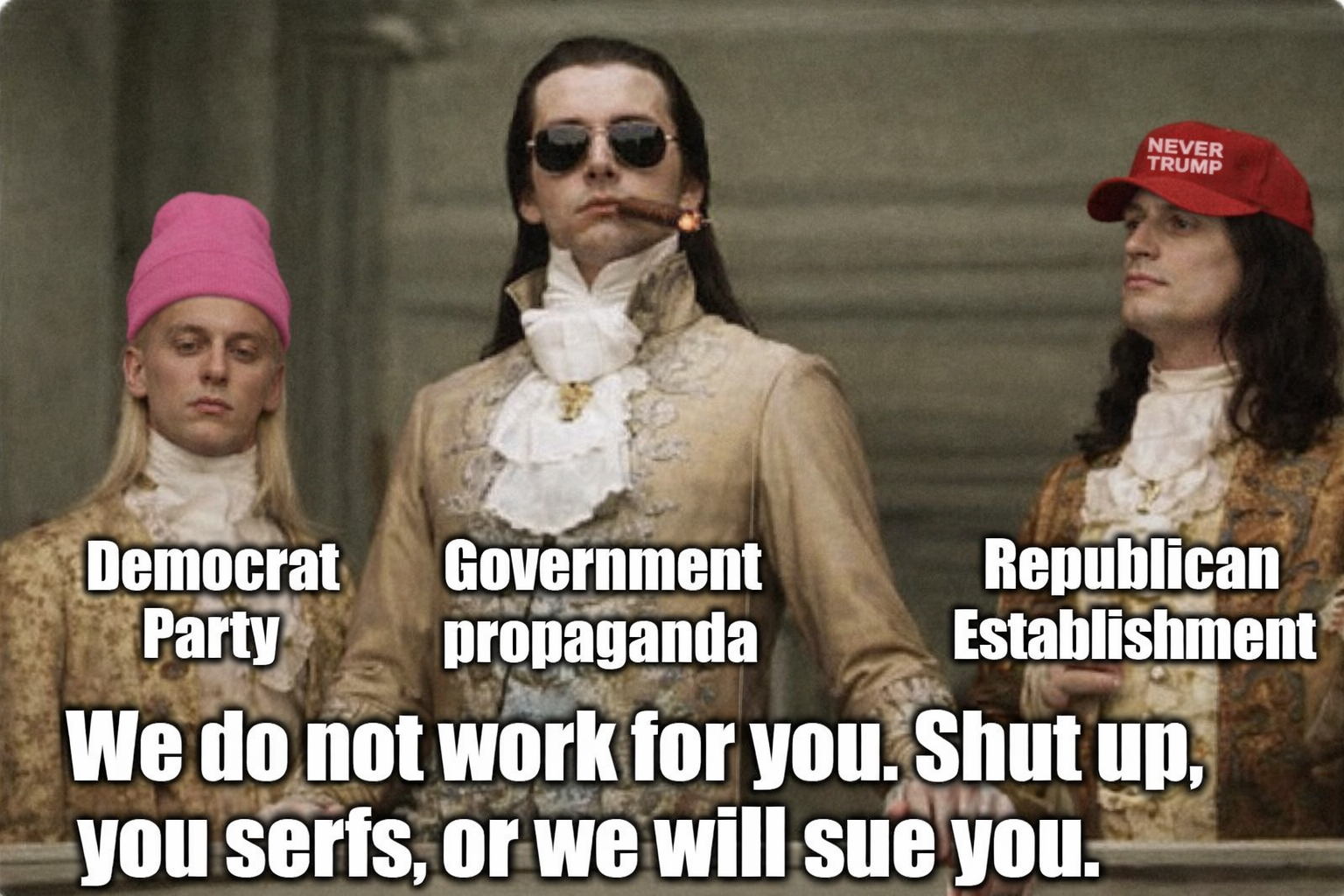
They sue dissent into submission. They harass critics. They gaslight citizens as extremists for asking normal questions. They hide behind counsel. They hide behind procedure. They hide behind agenda control. They use government positions, government jobs, and government networks to protect themselves and their allies.
They do not uphold the principles they swore an oath to protect.
They do not relinquish power easily.
They do not go quietly.
But neither will the people of Hillsdale.
The cost of free speech will be paid. Townships are organizing for the first time in living memory and holding boards accountable. City Council has suffered defeats on institutional directives since residents showed up and said no. The establishment within is under attack on all fronts. The Lifeways scandal has exposed duplicity. The silence on election security is no longer just frustrating. It is revealing.
Normal everyday people are waking up from a decades long slumber. They are realizing a government that is supposed to be for them and by them has become for the government and by the government. And if you dare speak out, it will cost you.
Freedom is not free. The bill has come due.
Will you pay it with your time, attention, and involvement?
Or will you stay silent while it sells your children’s future and finances its own power through ever increasing taxes, fees, and fines?
Because the one thing that corrupt systems cannot tolerate is a citizenry that refuses to be priced out.
in liberty,
the Hillsdale Conservatives

Leave a Reply