St. Joseph County officials answered in seconds what Hillsdale County officials have avoided for years
THE HILLSDALE CONSERVATIVES
Truth • Liberty • Local Stewardship
• Hillsdale County, Michigan • April 29, 2026 • 2¢
Full St. Joseph County Republican Party meeting video, or public portion available for reference. The Adam Times
There are moments when the truth does not need a courtroom, a committee, or a twelve-page legal memorandum.
Sometimes it just needs an honest question asked in another county.
At the latest St. Joseph County Republican Party meeting, Stephanie Scott gave a presentation regarding election-security issues in Hillsdale County. Because of ongoing court proceedings, that portion of the meeting will not be publicly released, yet.
But several public clips from the meeting tell Hillsdale residents plenty.
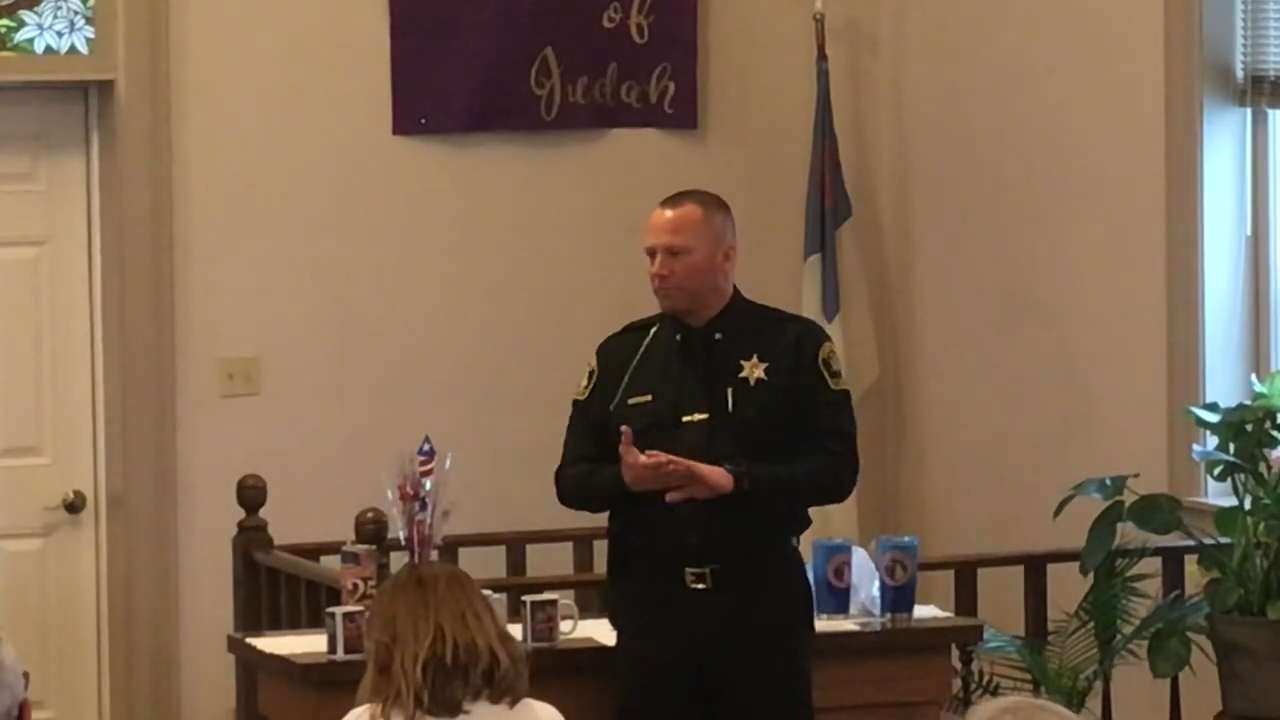
In the room were the St. Joseph County Sheriff, the St. Joseph County Clerk, and the St. Joseph County Prosecutor and State Rep. Steve Cara. They listened. They answered. They discussed the very kind of election-administration issues Hillsdale officials have spent years refusing to seriously confront.
That alone should embarrass Hillsdale County.
Because Hillsdale County has had sworn admissions. Hillsdale County has had election-record questions. Hillsdale County has had Adams Township. Hillsdale County has had precinct delegate elections where grassroots Republicans were removed through technicalities and administrative corruption.
And what have Hillsdale County’s own officials done?
Very little, publicly.
Or, more accurately, they have done what institutions usually do when the spotlight points inward.
They protect themselves and the institution.
The Question Every Clerk Should Be Able to Answer
Clip: St. Joseph County Clerk asked about a precinct delegate filing from a single-precinct township where the precinct number was left blank.
One public clip began with a basic election-administration question directed to the St. Joseph County Clerk.
If a precinct delegate application comes from a township with only one precinct, and the applicant fails to write the precinct number on the form, would that candidate be disqualified?
That question matters in Hillsdale County because most Hillsdale townships are single-precinct townships. In plain English, there is no real mystery. If a township only has one precinct, then the missing number “1” does not create confusion over where the candidate belongs.
It creates only one thing:
An opportunity.
An honest clerk sees an obvious omission and helps correct it.
A political clerk sees a chance to remove someone.
The St. Joseph County Clerk explained that her office wants candidates to come in person so staff can review the form, make sure it is filled out properly, and allow the applicant to amend obvious issues.
When Rep. Steve Carra pressed the question again, asking about a township where it was obvious there was only one precinct, the answer came back with refreshing simplicity.
She said she would go by good ethics and the intent of the filing.
Good ethics.
Intent.
Correction.
Participation.
That is what normal election administration sounds like when the goal is to let citizens participate rather than find a technical excuse to keep them out.
Then someone in the room said what many Hillsdale Republicans already know:
“For the record, in Hillsdale County, that’s how they got rid of a lot of us.”
Rep. Carra followed up by asking whether a clerk would wait until the last day and then notify the filer with no meaningful time to respond.
The St. Joseph County Clerk answered plainly:
“No, absolutely not.”
Then Carra said the obvious part out loud:
“The Hillsdale County Clerk was obviously playing games.”
That is the line Hillsdale officials do not want examined.
Not because the issue is complicated.
Because the answer is painfully simple.
Unethical procedure is the Weapon
This is the heart of the precinct delegate issue.
The public was told to treat these matters like technical election-office details. Forms. Lines. Numbers. Filing windows. Deadlines.
Procedure becomes power when the person controlling the paperwork is allowed to decide who gets to participate and who gets removed.
In a single-precinct township, a missing precinct number should not become a political death sentence. It should be handled like any obvious clerical issue: identify it, notify the filer, allow correction, and honor the intent of lawful participation.
That is not favoritism.
That is basic administrative fairness.
But in Hillsdale County, grassroots Republicans have alleged for years that these technicalities were not applied neutrally. They were used selectively. They were used to narrow the field. They were used to protect control.
And when the same fact pattern was presented to another county clerk, the response was not fog, evasion, or institutional theater.
It was common sense.
It was ethics.
It was correction.
Imagine that.
“We Should Be Investigating That”
Clip: St. Joseph County Sheriff asked whether he would protect a clerk facing a situation like Stephanie Scott’s.
The second clip moved from procedure to law enforcement.
After Stephanie Scott’s presentation on Hillsdale County election-security issues, a guest asked the St. Joseph County Sheriff a direct hypothetical:
If something like what happened to Stephanie Scott happened here, would you protect the clerk?
The sheriff did not dodge the question. He did not bury it under political discomfort. He did not act like statutes are decorative suggestions placed in law books to make the shelves look serious.
His answer was direct:
“Like she said, statutes, we should be investigating that.”
That sentence should echo through Hillsdale County.
Because in Hillsdale County, that is exactly what has not happened.
Hillsdale County has had sworn transcript admissions involving election records, EPB data, cast vote records, Adams Township ballots, and the treatment of a township clerk who raised preservation concerns. Hillsdale County also has unresolved allegations that precinct delegate elections were manipulated through selective enforcement and administrative technicalities.
The St. Joseph County Clerk also made clear that she would use her resources to investigate and would trust the sheriff in his role in that investigation. The sheriff explained that these matters require communication among key county offices, including the clerk and prosecutor.
That is what a functioning accountability chain sounds like.
The clerk does not pretend the problem does not exist.
The sheriff does not pretend statutes are someone else’s concern.
The prosecutor is not treated like a locked drawer no one is allowed to open.
Each office has a role.
Each office has a duty.
And the public has every right to expect those duties to be performed.
Then someone in the room said the part Hillsdale residents already understand:
“We don’t have that in Hillsdale.”
No, we do not.
Hillsdale’s Accountability Chain Is Broken
In Hillsdale County, the problem is no longer a lack of evidence.
The County Clerk has faced serious allegations involving precinct delegate elections and has made sworn admissions in court regarding election records and Adams Township ballots.
The Sheriff has not publicly acted.
The Prosecutor has not publicly acted.
The Clerk, naturally, has not investigated himself.
This is precisely why county government is supposed to have checks and balances. When one office fails, another is supposed to act. When the public brings documented concerns, public officials are supposed to receive them, examine them, and perform their statutory duties.
Instead, Hillsdale County residents have watched the same familiar performance.
First, ignore the issue.
Then minimize the issue.
Then blame the citizens for noticing the issue.
Then change the rules so citizens have a harder time bringing up the issue.
Which brings us to the Hillsdale County Board of Commissioners.
From “Shall” to “May”
After the Sheriff, Prosecutor, and County Clerk failed to perform their duties, residents looked to the County Commissioners.
That is not radical.
That is basic county governance.
If sworn admissions and election-administration concerns are placed before the board, the board should not hide behind silence. It should receive the matter, place it before the public, and act within its authority.
Instead, after previously declining to perform their own statutory responsibilities, the Commissioners have now taken it upon themselves to rewrite their own bylaws.
The key change?
Residents who previously had a clearer path to present matters before the board now face a new standard.
The word “shall” became “may.”
That is not a small edit.
That is a power transfer.
“Shall” means the public has a right the board must honor.
“May” means the chair gets discretion.
And discretion, in Hillsdale County, has a funny way of landing in the same direction every time.
When citizens bring uncomfortable facts, suddenly the process becomes flexible.
When officials want control, suddenly the rules become very firm.
This bylaw change is not happening in a vacuum. It comes after citizens raised election-law concerns. It comes after officials failed to investigate. It comes after residents attempted to bring matters before the board involving the County Clerk, precinct delegate manipulation, and sworn admissions tied to election records and Adams Township.

Screenshot: County Clerk response citing Rule 5.13.4 and stating that the current bylaws do not automatically grant a member of the public the right to place items on the Board agenda or receive extended presentation time.
And the irony could not be more perfect.
A resident requests to be placed on the agenda to present a matter involving county election concerns, sworn admissions, and the failure of county offices to act.
The Commissioners have just changed the rule from “shall” to “may,” giving the Board Chair discretionary authority over whether such a presentation may be placed on the agenda.
But who sends the response?
Not the Chair.
The County Clerk.
The same office sitting at the center of the very controversy residents are trying to bring before the Board is now the office notifying residents that, under the newly revised bylaws, they do not have an automatic right to be placed on the agenda.
That is Hillsdale County government in miniature.
The public raises concerns about the Clerk.
The Sheriff does not publicly investigate.
The Prosecutor does not publicly prosecute.
The Commissioners do not publicly act.
Then the Board changes its bylaws to make it harder for residents to force the issue into the open.
And when a resident asks to present the matter anyway, the Clerk’s office steps forward to explain why the public may be limited.
You almost have to admire the efficiency of it.
A controversy about election administration, public accountability, and institutional self-protection is met with more election-office-adjacent gatekeeping, more procedural fog, and more reminders that the public may speak during normal public comment like everyone else, provided they stay inside the little box government has left for them.
So now the people who failed to act are rewriting the rules governing how citizens may ask them to act.
And the office tied to the unresolved controversy is helping announce the new limits.
That is not accountability.
That is a barricade.
Another County Listened
The lesson from St. Joseph County is not that another county can solve Hillsdale’s problems.
It cannot.
The lesson is that another county’s officials were willing to treat these questions like real questions.
A clerk answered as a clerk should answer.
A sheriff answered as a sheriff should answer.
The offices were discussed as offices with duties, not as political fortresses to be defended at all costs.
That is why the clips matter.
They expose Hillsdale’s failure by comparison.
In St. Joseph County, the instinct was to investigate.
In Hillsdale County, the instinct has been to protect.
In St. Joseph County, the clerk talked about good ethics and intent.
In Hillsdale County, the clerk uses their position to manipulation elections, destroy the evidence, and local officials not only look the other way, they use their positions to participate in covering it all up.
In St. Joseph County, the sheriff said statutes should be investigated.
In Hillsdale County, the public is still waiting for someone to discover the courage required to read the transcript and act like the law applies to everyone. It certainly isn’t going to be the Sheriff.
The Public Is Not the Problem
Hillsdale residents are not the problem for asking questions.
Grassroots Republicans are not the problem for demanding fair precinct delegate elections.
Stephanie Scott was not the problem for raising preservation concerns.
Adams Township was not the problem for expecting its election materials to be handled according to law.
The problem is a county government culture that treats accountability as an attack and citizen oversight as an inconvenience.
And now, with the Commissioners changing “shall” to “may,” the message is becoming clearer by the day:
They do not want to answer the public.
They gave themselves permission to avoid the public.
But changing a bylaw does not erase the facts.
It does not erase sworn admissions.
It does not erase the precinct delegate questions.
It does not erase Adams Township.
It does not erase the silence of the Sheriff and Prosecutor.
And it does not erase the simple truth revealed in another county’s meeting room:
When officials take their duties seriously, these questions are not hard.
Only Hillsdale keeps pretending they are.
In liberty,
Lance Lashaway

Leave a Reply