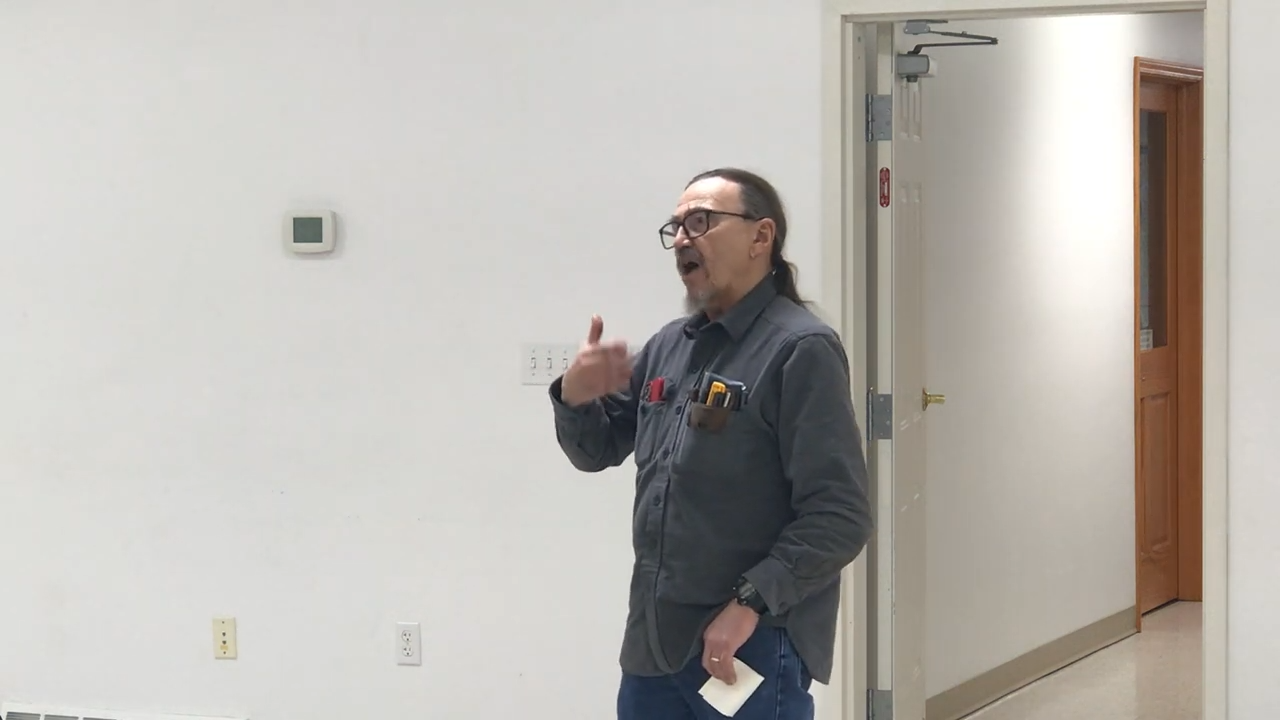
Provided by the Adams Times. 20 minute mark.
Late last evening, Hillsdale Conservatives formally notified the Hillsdale County Board of Commissioners that the organization’s previously submitted Demand Letter and Proposed Resolution were being refused placement on the agenda for the Board’s January 13 meeting.
That notice was not sent for political theater. It was sent to preserve the public record and to correct a misunderstanding that had begun to surface publicly.
At a township meeting, a county commissioner stated on the record that the Board would not involve itself in an ongoing court case and implied that the commissioners had no duty to act. That framing is incorrect as a matter of law, and allowing it to stand unchallenged would permit silence to replace governance.
The email was sent to make clear what the request actually is, what it is not, and what duties are triggered once notice is given.
This Is Not a Request to Intervene in a Court Case
The materials submitted to the Board do not ask commissioners to rule on guilt or innocence, influence a judge, or interfere with any matter currently pending before the Circuit Court.
They rely on sworn testimony already given under oath and on a District Court ruling that dismissed a search warrant as unlawful. Those are completed judicial actions and part of the permanent court record. Acknowledging them does not interfere with any ongoing proceeding.
The request asks the Board to acknowledge established facts, preserve county records, and determine whether referral to independent authorities is appropriate. Those are governance functions, not judicial ones.
What Duties Are Triggered After Notice
County commissioners are correct that they are a legislative body. What is incorrect is the claim that this status relieves them of responsibility once credible evidence of unlawful conduct affecting county records and elections is placed before them.
After notice, several duties arise even for a legislative body.
The Michigan Open Meetings Act requires that the deliberations and decisions of public bodies be conducted openly and on the public record. When a matter affecting county governance is formally raised, the Board may choose not to act, but that choice must be made publicly. Private refusal is not a substitute for open deliberation.
MCL 15.262
MCL 15.263
Michigan and federal law require preservation of election records. When litigation or potential liability is reasonably foreseeable, public bodies have a mandatory duty to preserve records and prevent spoliation. This duty exists regardless of whether criminal charges are filed.
MCL 168.811
52 USC 20701
Beyond statutory obligations, the Board has a fiduciary duty to the County itself.
What Fiduciary Duty Means for County Commissioners
A fiduciary duty is a legal obligation to act in the best interests of another party. In this case, the Hillsdale County Board of Commissioners is the fiduciary for Hillsdale County and its residents.
In practical terms, fiduciary duty requires commissioners to act with care, loyalty, and good faith to protect the County from foreseeable harm.
That includes the duty to act prudently when credible risks are identified, to avoid ratifying potentially unlawful conduct through silence, to protect the County from unnecessary legal exposure, to ensure transparency once material issues are placed on notice, and to safeguard public trust in county institutions, especially elections.
Fiduciary duty does not require commissioners to accuse anyone of wrongdoing. It does not require removal of an elected official. It does not require interference with a court case. But it does require acknowledgment, preservation, and appropriate referral when credible issues arise.
The Added Risk of Continued Inaction
There is an additional factor the Board cannot responsibly ignore.
The county clerk who admitted under oath to actions raising serious legal questions regarding election records and authority has continued to administer elections since that testimony was given.
This fact alone does not establish wrongdoing in any subsequent election. Hillsdale Conservatives is not alleging that recent elections were unlawful or compromised. However, once sworn testimony and a judicial ruling place credible concerns on the public record, continued inaction by the governing body materially increases the County’s exposure.
If future disputes arise, the question will not be whether commissioners personally believed misconduct occurred. The question will be whether they acted reasonably and transparently after notice. Silence after notice is not neutral. It is a choice that can later be examined as a failure to exercise fiduciary responsibility.
Because elections have continued to be administered after these sworn admissions, the issue is no longer theoretical. It is present governance.
Why the Demand and Resolution Were Submitted
Hillsdale Conservatives submitted two documents to the Board and requested they be placed on the January 13 agenda.
The first document is a Formal Notice and Demand. Its purpose is to place the Board on record that sworn testimony and a judicial ruling now constitute credible evidence raising statutory and constitutional concerns affecting county governance and elections. Once such notice exists, silence is no longer a lawful default.
The second document is a Proposed Resolution. It asks the Board to acknowledge the established record, direct preservation of all relevant election records and communications, consider referral to independent authorities, and record a roll call vote so the public can see how each commissioner responds.
Neither document accuses anyone of a crime. Neither document directs prosecution. They exist to ensure lawful process and transparency.
What Happens If the Board Refuses
If the Board refuses to place the matter on the agenda or declines to deliberate in public, the issue does not disappear. The refusal itself becomes part of the record.
At that point, it is no longer a question of awareness. It is a documented decision not to act after notice. Michigan law recognizes that public bodies can ratify conduct not only through action, but through deliberate inaction once credible issues are brought forward.
Whether the Board agrees with the concerns is not the test. Whether it fulfills its duty to respond openly and prudently is.
Reply from the Commissioners Chair regarding initial request:

Response
Why This Matters to Voters
This issue is not about personalities or partisanship. It is about whether local government follows the law when the law becomes inconvenient.
Voters depend on county commissioners to act as stewards of public trust, especially when elections are involved. When sworn testimony and judicial rulings raise serious questions, voters have a right to see their representatives acknowledge the issue, preserve records, and decide openly what steps are appropriate.
Attendance at the January 13 meeting matters because silence in a meeting is harder to explain than silence in an email. Voters deserve to see whether their commissioners will confront the record openly or avoid it altogether.
in liberty,
the Hillsdale Conservatives

Leave a Reply